Alonben Meir
  • About
  • Contact
Alonben Meir
  • About
  • Contact
  • Home
  • Writings
  • Media
  • Events
  • Books
  • Courses
Alon Ben-Meir
  • Home
  • Writings
  • Media
  • Events
  • Books
  • Courses

Newest Article

Civilization Unmasked: The Persistence of Human Brutality We are not merely witnessing human suffering—we are learning to endure it without outrage. When atrocity no longer shocks the conscience, it is not only humanity that is under assault—it... Continue reading

Recent Articles

View All Articles

History Will Not Yield to Power

For decades, Israel and the Palestinians have tried to bend reality to their will. But reality does not yield to force, memory does not fade on command, and justice cannot be indefinitely deferred Over the past three decades, I have written hundreds of articles and several books on the Israeli-Palestinian conflict, examining it from historical,…

Turkey’s Egregious Human Rights Violations Are Beyond The Pale

Turkey’s human rights record has crossed from troubling to indefensible. Behind the language of counterterrorism and national security lies a systematic campaign that has dismantled the rule of law, criminalized dissent, and stripped hundreds of thousands of their most basic rights In the aftermath of the 2016 attempted coup, Turkey’s President Erdogan embarked on a…

The Global Epidemic Of Violence In An Age Of Impunity

Violence has metastasized into humanity’s baseline condition. Yet international institutions remain paralyzed by vetoes and rivalry, offering hollow declarations while dehumanization becomes normalized. Coordinated action, not gestures, is desperately needed Global violence today is metastasizing, not contained; over 180,000 violent events reported globally by the International Institute for Strategic Studies signal a world in which…

The Shattered Covenant

As Israel celebrates its 78th anniversary Israel! I speak not in anger, but in mourning. What unfolds here is not prophecy— It is a confession. A lament for a nation that lost its way. A reckoning with faith betrayed, with justice undone. The dream of Israel, once radiant, redemptive, now stands fractured— its soul adrift…

Latest Interviews

View All Interviews

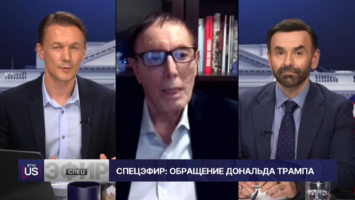
RTVI – Trump’s Statement on Iran

RTVI – Trump’s First 100 Days

Latest Podcasts

View All Podcasts

On the Issues Episode 152: Ambassador Patrick Theros

Alon Ben-Meir · On the Issues Episode 152: Ambassador Patrick Theros

On the Issues Episode 151: Anne Speckhard

Alon Ben-Meir · On the Issues Episode 151: Anne Speckhard

On the Issues Episode 150: Dimitris Eleas

Alon Ben-Meir · On the Issues Episode 150: Dimitris Eleas

Video

View All Videos

Will Saudi Arabia Become a Peace-Maker? – LA Jews for Peace

Recent Social Activity

Alon Ben-Meir

alonbenmeir

1,886 1,015

Retired Professor at @nyucga, Senior Fellow at World Policy Institute.

Today’s podcast guest is Ambassador Patrick Theros, Strategic Advisor and Non-Resident Senior Fellow at the Gulf International Forum. He previously served as the U.S. Ambassador to the State of Qatar.⁠
⁠
We discuss the US-Israel-Iran war and the pending peace agreement between the US and Iran, the impacts of the war on the region, and how this conflict has affected the political prospects of Donald Trump and Benjamin Netanyahu.⁠
⁠
Listen now; link in bio.⁠
⁠
Full bio⁠
Ambassador Patrick Nickolas Theros is a Strategic Advisor and Non-Resident Senior Fellow at the Gulf International Forum. He served as the U.S. Ambassador to the State of Qatar from 1995-1998. Prior to his appointment, he served as Deputy Coordinator for Counterterrorism, responsible for the coordination of all U.S. Government counterterrorism activities outside the United States. From 1991-1993, Ambassador Theros served as the Political Advisor to the Commander-in-Chief of Central Command (CENTCOM).⁠
⁠
Ambassador Theros joined the Foreign Service in 1963, and served in a variety of positions in Washington D.C., Saudi Arabia, Lebanon, Nicaragua and Syria, including charge d’affaires and Deputy Chief of Mission at the U.S. embassies in the United Arab Emirates and Jordan.⁠
⁠
In 1999, His Highness Sheikh Hamad bin Khalifah Al-Thani awarded Ambassador Theros the Qatar Order of Merit for his efforts in service of the U.S.-Qatar bilateral relationship. His commitment to national service also earned him the President’s Meritorious Service Award and the Secretary of Defense Medal for Meritorious Civilian Service. Ambassador Theros has also earned four Superior Honor Awards, the highest awards for distinguished service given by the Foreign Service.⁠
⁠
Ambassador Theros graduated from Georgetown University’s School of Foreign Service in 1963. He has done advanced studies at the American University in Washington, D.C., the Universidad Centroamericana in Nicaragua, the Armed Forces Staff College at Norfolk, Virginia, and the National Defense University in Washington, D.C. He speaks and reads Spanish, Arabic and Greek professionally.

2 0
Open
Today’s podcast guest is Ambassador Patrick Theros, Strategic Advisor and Non-Resident Senior Fellow at the Gulf International Forum. He previously served as the U.S. Ambassador to the State of Qatar.⁠
⁠
We discuss the US-Israel-Iran war and the pending peace agreement between the US and Iran, the impacts of the war on the region, and how this conflict has affected the political prospects of Donald Trump and Benjamin Netanyahu.⁠
⁠
Listen now; link in bio.⁠
⁠
Full bio⁠
Ambassador Patrick Nickolas Theros is a Strategic Advisor and Non-Resident Senior Fellow at the Gulf International Forum. He served as the U.S. Ambassador to the State of Qatar from 1995-1998. Prior to his appointment, he served as Deputy Coordinator for Counterterrorism, responsible for the coordination of all U.S. Government counterterrorism activities outside the United States. From 1991-1993, Ambassador Theros served as the Political Advisor to the Commander-in-Chief of Central Command (CENTCOM).⁠
⁠
Ambassador Theros joined the Foreign Service in 1963, and served in a variety of positions in Washington D.C., Saudi Arabia, Lebanon, Nicaragua and Syria, including charge d’affaires and Deputy Chief of Mission at the U.S. embassies in the United Arab Emirates and Jordan.⁠
⁠
In 1999, His Highness Sheikh Hamad bin Khalifah Al-Thani awarded Ambassador Theros the Qatar Order of Merit for his efforts in service of the U.S.-Qatar bilateral relationship. His commitment to national service also earned him the President’s Meritorious Service Award and the Secretary of Defense Medal for Meritorious Civilian Service. Ambassador Theros has also earned four Superior Honor Awards, the highest awards for distinguished service given by the Foreign Service.⁠
⁠
Ambassador Theros graduated from Georgetown University’s School of Foreign Service in 1963. He has done advanced studies at the American University in Washington, D.C., the Universidad Centroamericana in Nicaragua, the Armed Forces Staff College at Norfolk, Virginia, and the National Defense University in Washington, D.C. He speaks and reads Spanish, Arabic and Greek professionally.

Today’s guest is Dr. Anne Speckhard, Director of the International Center for the Study of Violent Extremism. She is an expert in rehabilitation and repatriation of terrorists and their families, and has consulted with foreign governments on issues of terrorist prevention, interventions and repatriation; and the rehabilitation and reintegration of ISIS foreign fighters, wives and children. Her latest book, Homegrown Hate: Inside the Minds of Domestic Violent Extremists, examines the deepening threat of domestic violent extremism in the U.S. through more than 50 in-depth interviews with current and former members of a wide range of domestic hate groups.⁠
⁠
In this episode, we discuss the psychological and psychosocial dimensions of violent extremism, what attracts people to these ideologies, how terrorists and violent extremists have been able to utilize social media to draw people into their ideologies, and what can be done to try to prevent people from falling into these extremist ideologies.⁠
⁠
Listen now; link in bio.

2 0
Open
Today’s guest is Dr. Anne Speckhard, Director of the International Center for the Study of Violent Extremism. She is an expert in rehabilitation and repatriation of terrorists and their families, and has consulted with foreign governments on issues of terrorist prevention, interventions and repatriation; and the rehabilitation and reintegration of ISIS foreign fighters, wives and children. Her latest book, Homegrown Hate: Inside the Minds of Domestic Violent Extremists, examines the deepening threat of domestic violent extremism in the U.S. through more than 50 in-depth interviews with current and former members of a wide range of domestic hate groups.⁠
⁠
In this episode, we discuss the psychological and psychosocial dimensions of violent extremism, what attracts people to these ideologies, how terrorists and violent extremists have been able to utilize social media to draw people into their ideologies, and what can be done to try to prevent people from falling into these extremist ideologies.⁠
⁠
Listen now; link in bio.

Global violence today is metastasizing, not contained; over 180,000 violent events are reported globally, signaling a world in which conflict has become a baseline condition rather than an exception. Yet the UN system and democracies appear increasingly paralyzed—trapped in vetoes, geopolitical rivalries, and hollow declarations—offering gestures of concern instead of enforcing accountability, which is desperately needed.

5 4
Open
Global violence today is metastasizing, not contained; over 180,000 violent events are reported globally, signaling a world in which conflict has become a baseline condition rather than an exception. Yet the UN system and democracies appear increasingly paralyzed—trapped in vetoes, geopolitical rivalries, and hollow declarations—offering gestures of concern instead of enforcing accountability, which is desperately needed.

I recently spoke with Dimitris Eleas, a political scientist, writer, and independent researcher, on my podcast, discussing the human impact of global wars and violence. As Dimitris poignantly observes, the poor, the children, and women are those who suffer the most. ⁠
⁠
Listen to this and more in my latest podcast episode; link in bio.

7 4
Open
I recently spoke with Dimitris Eleas, a political scientist, writer, and independent researcher, on my podcast, discussing the human impact of global wars and violence. As Dimitris poignantly observes, the poor, the children, and women are those who suffer the most. ⁠
⁠
Listen to this and more in my latest podcast episode; link in bio.
Follow on Instagram
Used for the like, share, comment, and reaction icons
Alon Ben-Meir
4 hours ago
Alon Ben-Meir

Congress has approved nearly $70 billion for immigration enforcement through 2029, including tens of billions for ICE and CBP, despite mounting allegations of abuse and calls for reform. The funding increase comes without meaningful new oversight measures, raising serious concerns about accountability. Human Rights Watch has documented reports of racial profiling, excessive force, abusive detention practices, medical neglect, and deteriorating conditions in immigration facilities. Yet instead of addressing these concerns, lawmakers have dramatically expanded the resources available to the very agencies facing scrutiny. Critics argue that Congress has effectively written a blank check while failing to establish stronger safeguards against misconduct. The question is no longer whether abuses have occurred, but whether Washington is willing to confront them—or simply fund more of the same. ... See MoreSee Less

Congress has approved nearly $70 billion for immigration enforcement through 2029, including tens of billions for ICE and CBP, despite mounting allegations of abuse and calls for reform. The funding increase comes without meaningful new oversight measures, raising serious concerns about accountability. Human Rights Watch has documented reports of racial profiling, excessive force, abusive detention practices, medical neglect, and deteriorating conditions in immigration facilities. Yet instead of addressing these concerns, lawmakers have dramatically expanded the resources available to the very agencies facing scrutiny. Critics argue that Congress has effectively written a blank check while failing to establish stronger safeguards against misconduct. The question is no longer whether abuses have occurred, but whether Washington is willing to confront them—or simply fund more of the same.
View on Facebook
· Share
Share on Facebook Share on Twitter Share on Linked In Share by Email
View Comments
  • Likes: 0
  • Shares: 0
  • Comments: 0

0 CommentsComment on Facebook

Alon Ben-Meir
2 days ago
Alon Ben-Meir

The war, launched with the stated objectives of crippling Iran’s nuclear and missile programs, dismantling its regional proxy network, and perhaps even achieving regime change, has instead exposed the limits of Israeli and American coercive power. The emerging U.S.–Iran memorandum of understanding is not a comprehensive peace treaty but a framework that buys time: it reopens the Strait of Hormuz, extends a temporary ceasefire, and defers the hardest questions about enrichment, ballistic missiles, and proxy militias to future negotiations. Iran’s regime survives, its network of clients from Hezbollah and Hamas to the Houthis remains battered but intact, and its capacity to rebuild military capabilities is widely acknowledged. Politically, the outcome entrenches Tehran’s leadership while leaving Israel strategically bruised, and it has badly undercut Benjamin Netanyahu’s claim to unique strategic competence just as Israel moves toward elections in 2026, where polling already shows his coalition hemorrhaging public support. ... See MoreSee Less

The war, launched with the stated objectives of crippling Iran’s nuclear and missile programs, dismantling its regional proxy network, and perhaps even achieving regime change, has instead exposed the limits of Israeli and American coercive power. The emerging U.S.–Iran memorandum of understanding is not a comprehensive peace treaty but a framework that buys time: it reopens the Strait of Hormuz, extends a temporary ceasefire, and defers the hardest questions about enrichment, ballistic missiles, and proxy militias to future negotiations. Iran’s regime survives, its network of clients from Hezbollah and Hamas to the Houthis remains battered but intact, and its capacity to rebuild military capabilities is widely acknowledged. Politically, the outcome entrenches Tehran’s leadership while leaving Israel strategically bruised, and it has badly undercut Benjamin Netanyahu’s claim to unique strategic competence just as Israel moves toward elections in 2026, where polling already shows his coalition hemorrhaging public support.
View on Facebook
· Share
Share on Facebook Share on Twitter Share on Linked In Share by Email
View Comments
  • Likes: 4
  • Shares: 2
  • Comments: 1

1 CommentComment on Facebook

AMAZING .. the deal has not even been published and the left is already lying about it.. .. This morning 6/15/26 Hakeem Jeffries said “we don’t know what’s in the Iran deal yet but it’s a disaster”… let the idiocy of that statement sink in.

Alon Ben-Meir
2 days ago
Alon Ben-Meir

Trump’s touted “peace deal” with Iran is, in reality, little more than a memorandum of understanding to revisit core disputes—including Tehran’s nuclear program—later. It amounts to a temporary 60-day ceasefire while negotiations resume over the very issues that triggered the conflict, with no binding commitments on enrichment levels, inspection regimes, or regional activities. The accord is deliberately ambiguous on sanctions relief and sequencing, inviting future disagreement over who violated what and when. His claim of reopening the Strait of Hormuz is equally hollow; the Strait functioned freely before the war, and no new legal or security architecture has been created to guarantee passage. This is not a breakthrough but a deferral, leaving the central crisis unresolved and structurally primed for relapse once the 60 days expire. ... See MoreSee Less

Trump’s touted “peace deal” with Iran is, in reality, little more than a memorandum of understanding to revisit core disputes—including Tehran’s nuclear program—later. It amounts to a temporary 60-day ceasefire while negotiations resume over the very issues that triggered the conflict, with no binding commitments on enrichment levels, inspection regimes, or regional activities. The accord is deliberately ambiguous on sanctions relief and sequencing, inviting future disagreement over who violated what and when. His claim of reopening the Strait of Hormuz is equally hollow; the Strait functioned freely before the war, and no new legal or security architecture has been created to guarantee passage. This is not a breakthrough but a deferral, leaving the central crisis unresolved and structurally primed for relapse once the 60 days expire.
View on Facebook
· Share
Share on Facebook Share on Twitter Share on Linked In Share by Email
View Comments
  • Likes: 3
  • Shares: 1
  • Comments: 2

2 CommentsComment on Facebook

So, how ‘bout we agree to talk about this in, ohhhh, … two months?

Beghirat admi

Alon Ben-Meir
2 days ago
Alon Ben-Meir

As the world marks World Day Against Child Labor, an estimated 138 million children remain trapped in child labor, including 54 million engaged in hazardous work. Poverty, inequality, and the cost of education continue to force millions of children out of classrooms and into workplaces. Despite decades of progress, the number of children out of school worldwide has risen for seven consecutive years, reaching 273 million. Human rights advocates and international organizations increasingly recognize that free, quality education is one of the most effective ways to combat child labor and break cycles of poverty. Ensuring access to education is not only an investment in children’s futures—it is a fundamental step toward protecting their rights, dignity, and opportunities for a better life. ... See MoreSee Less

As the world marks World Day Against Child Labor, an estimated 138 million children remain trapped in child labor, including 54 million engaged in hazardous work. Poverty, inequality, and the cost of education continue to force millions of children out of classrooms and into workplaces. Despite decades of progress, the number of children out of school worldwide has risen for seven consecutive years, reaching 273 million. Human rights advocates and international organizations increasingly recognize that free, quality education is one of the most effective ways to combat child labor and break cycles of poverty. Ensuring access to education is not only an investment in children’s futures—it is a fundamental step toward protecting their rights, dignity, and opportunities for a better life.
View on Facebook
· Share
Share on Facebook Share on Twitter Share on Linked In Share by Email
View Comments
  • Likes: 6
  • Shares: 1
  • Comments: 4

4 CommentsComment on Facebook

Even if the first world did build schools and provide teachers, is anyone really so deluded to believe that the slavers are going to just let the children leave the fields and mines and go to class?

free ?

Fuck off with this stupid libtard virtue-signaling bullshit.

Load more
  • Associates
  • FAQ
  • Privacy Policy
Sign up for our email newsletter to get latest updates to your inbox.
Copyright 2004 - 2026, Dr. Alon Ben-Meir. All rights reserved