Alonben Meir
  • About
  • Contact
Alonben Meir
  • About
  • Contact
  • Home
  • Writings
  • Media
  • Events
  • Books
  • Courses
Alon Ben-Meir
  • Home
  • Writings
  • Media
  • Events
  • Books
  • Courses

Newest Article

Israel’s Arab Citizens May Save Israel from Itself Israel’s opposition leaders cannot chart a new course by preserving the politics of exclusion. Embracing Arab citizens as genuine partners is essential to democratic renewal and a future grounded in... Continue reading

Recent Articles

View All Articles

An Open Letter to President Trump: Imagining the U-Turn That Could Shock the World

Mr. President, This letter is an exercise in political imagination—not a prediction, and certainly not an endorsement. I do not expect its suggestions to awaken your conscience. But with you, a dramatic reversal never seems entirely impossible. That is not necessarily a compliment. It does leave room to imagine something almost nobody expects: that you…
The Democrats’ Stunning Win: What They Must Do Now

Democrats have won Congress. Now they have to show they can govern. They should limit investigations to the most serious abuses, work with Trump wherever he cooperates, and serve the whole nation rather than their party. With a new generation of leaders rising, how they use these two years will shape 2028 The Democrats’ sweep…

Iran: Compromise Or Catastrophe

Trump cannot bomb Iran into a lasting peace. The real test of American strength is not the power to destroy, but the wisdom to negotiate. The choice is compromise—or a catastrophe that neither side can contain There is no durable military solution to the American-Israeli conflict with Iran. Bombs can destroy installations, but they cannot…

Country Before Party: Israel’s Opposition Must Not Fail This Moment

The election has opened a path away from Netanyahu’s disastrous rule. Israel’s opposition must now choose: build a Jewish-Arab governing partnership or risk surrendering the country’s future to the forces tearing it apart Israel stands at a historic crossroads. The government that emerges from this election will determine whether the country begins to repair its…

Latest Interviews

View All Interviews

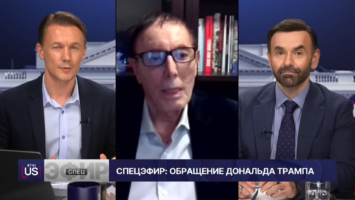
RTVI – Trump’s Statement on Iran

RTVI – Trump’s First 100 Days

Latest Podcasts

View All Podcasts

On the Issues Episode 178: Olena Suslova

Alon Ben-Meir · On the Issues Episode 178: Olena Suslova

On the Issues Episode 177: Andrada Fătu-Tutoveanu

Alon Ben-Meir · On the Issues Episode 177: Andrada Fătu-Tutoveanu

On the Issues Episode 176: Hillel Schenker

Alon Ben-Meir · On the Issues Episode 176: Hillel Schenker

Video

View All Videos

Will Saudi Arabia Become a Peace-Maker? – LA Jews for Peace

Recent Social Activity

Alon Ben-Meir

alonbenmeir

1,947 1,596

Retired Professor at @nyucga, Senior Fellow at World Policy Institute.

Is the Trump administration using government power to intimidate political opponents? When critics fear investigations, threats to their citizenship, or the destruction of their reputations for speaking out, democracy is in danger. This is how authoritarian governments, including Russia, suppress dissent: by creating fear and making examples of political opponents.

3 1
Open
Is the Trump administration using government power to intimidate political opponents? When critics fear investigations, threats to their citizenship, or the destruction of their reputations for speaking out, democracy is in danger. This is how authoritarian governments, including Russia, suppress dissent: by creating fear and making examples of political opponents.

Today’s podcast guest is Dr. Andrada Fătu-Tutoveanu, a Lecturer at Babeș-Bolyai University in Cluj-Napoca, Romania. She holds a PhD in Philology, and her work focuses on cultural studies and media and gender studies, with a recent focus on female life-writing in Cold War Romania.⁠
⁠
In this episode, we discuss women’s gendered experience of totalitarianism, particularly political terror under Ceaucescu’s regime in Romania. We assess the impacts of living under the communist regime on today’s Romanian society, and current political crises that are impacted by major changes in the current global situation.⁠
⁠
Listen now; link in bio.⁠
⁠
Andrada FĂTU-TUTOVEANU is a Lecturer at the “Babeș-Bolyai” University, Cluj-Napoca, Romania. Between 2017 and 2019, she was a Lecturer at the University of the Balearic Islands, Spain, and has been a member of the Media Studies research group (RIRCA) since 2017. She holds a PhD (2009) in Philology and conducted a three-year postdoctoral research project (2010-2013). Her work covers Cultural Studies, Media and Gender Studies, with a recent focus on female life-writing in Cold War Romania. Author of four monographs (among them Personal Narratives of Romanian Women during the Cold War (1945-1989), Edwin Mellen Press, 2015), book chapters and articles in international journals, and editor of several volumes. She was a member of international research projects on internationalization (IntlUni, 2014 and EXPERT-– Heading towards excellent European universities, 2011-2013, in Košice, Slovakia, where she also gave lectures), and a project manager or participant in different research projects. She was granted a STAR-UBB Advanced Fellowship in 2020.

4 0
Open
Today’s podcast guest is Dr. Andrada Fătu-Tutoveanu, a Lecturer at Babeș-Bolyai University in Cluj-Napoca, Romania. She holds a PhD in Philology, and her work focuses on cultural studies and media and gender studies, with a recent focus on female life-writing in Cold War Romania.⁠
⁠
In this episode, we discuss women’s gendered experience of totalitarianism, particularly political terror under Ceaucescu’s regime in Romania. We assess the impacts of living under the communist regime on today’s Romanian society, and current political crises that are impacted by major changes in the current global situation.⁠
⁠
Listen now; link in bio.⁠
⁠
Andrada FĂTU-TUTOVEANU is a Lecturer at the “Babeș-Bolyai” University, Cluj-Napoca, Romania. Between 2017 and 2019, she was a Lecturer at the University of the Balearic Islands, Spain, and has been a member of the Media Studies research group (RIRCA) since 2017. She holds a PhD (2009) in Philology and conducted a three-year postdoctoral research project (2010-2013). Her work covers Cultural Studies, Media and Gender Studies, with a recent focus on female life-writing in Cold War Romania. Author of four monographs (among them Personal Narratives of Romanian Women during the Cold War (1945-1989), Edwin Mellen Press, 2015), book chapters and articles in international journals, and editor of several volumes. She was a member of international research projects on internationalization (IntlUni, 2014 and EXPERT-– Heading towards excellent European universities, 2011-2013, in Košice, Slovakia, where she also gave lectures), and a project manager or participant in different research projects. She was granted a STAR-UBB Advanced Fellowship in 2020.

Among the most promising outcomes of the midterms is the emergence of young, qualified, energetic leaders. Their rise signals an opportunity for renewal: fresh ideas and a vision suited to a new generation’s challenges. These leaders must now turn promise into service that rebuilds trust and expands opportunity.

6 1
Open
Among the most promising outcomes of the midterms is the emergence of young, qualified, energetic leaders. Their rise signals an opportunity for renewal: fresh ideas and a vision suited to a new generation’s challenges. These leaders must now turn promise into service that rebuilds trust and expands opportunity.

Today’s podcast guest is Hillel Schenker, co-editor of the Palestine-Israel Journal, a Jerusalem-based independent English-language quarterly that aims to shed light on, and analyze freely and critically, the complex issues dividing Israelis and Palestinians. He has written for The Nation, Los Angeles Times, L.A. Weekly, Tikkun, Israel Horizons, In These Times, the Israeli-Hebrew-language press and many other print and electronic outlets. He was an activist and co-founder of the Peace Now movement and has served for many years as spokesperson for the Israeli branch of International Physicians for the Prevention of Nuclear War.⁠
⁠
In this episode, we discuss the results of the recent Israeli elections—how Netanyahu’s coalition lost the elections, what the various options are for Eisenkot to form a new government, with either the support of the Arab or Haredi parties, and what actions a change government can make in regards toward Israeli-Palestinian peace and broader regional peace.⁠
⁠
Listen now; link in bio.⁠
⁠
Full bio⁠
Hillel Schenker is co-editor of the Palestine-Israel Journal, a Jerusalem-based independent English-language quarterly, initiated and maintained by a group of prominent Israeli and Palestinian academics and journalists. It aims to shed light on, and analyze freely and critically, the complex issues dividing Israelis and Palestinians. Schenker served for 13 years as editor of New Outlook, the Israeli peace monthly founded in the spirit of Martin Buber’s philosophy of dialogue, that served as a vehicle for understanding Israeli-Arab affairs and as a catalyst for dialogue and initiatives for peace. He has written for The Nation, Los Angeles Times, L.A. Weekly, Tikkun, Israel Horizons, In These Times, the Israeli-Hebrew-language press and many other print and electronic outlets. He was an activist and co-founder of the Peace Now movement and has served for many years as spokesperson for the Israeli branch of International Physicians for the Prevention of Nuclear War. He is an International Advisory Board member of the Global Majority center for non-violent conflict resolution based at the Monterey Institute of International Studies.

3 0
Open
Today’s podcast guest is Hillel Schenker, co-editor of the Palestine-Israel Journal, a Jerusalem-based independent English-language quarterly that aims to shed light on, and analyze freely and critically, the complex issues dividing Israelis and Palestinians. He has written for The Nation, Los Angeles Times, L.A. Weekly, Tikkun, Israel Horizons, In These Times, the Israeli-Hebrew-language press and many other print and electronic outlets. He was an activist and co-founder of the Peace Now movement and has served for many years as spokesperson for the Israeli branch of International Physicians for the Prevention of Nuclear War.⁠
⁠
In this episode, we discuss the results of the recent Israeli elections—how Netanyahu’s coalition lost the elections, what the various options are for Eisenkot to form a new government, with either the support of the Arab or Haredi parties, and what actions a change government can make in regards toward Israeli-Palestinian peace and broader regional peace.⁠
⁠
Listen now; link in bio.⁠
⁠
Full bio⁠
Hillel Schenker is co-editor of the Palestine-Israel Journal, a Jerusalem-based independent English-language quarterly, initiated and maintained by a group of prominent Israeli and Palestinian academics and journalists. It aims to shed light on, and analyze freely and critically, the complex issues dividing Israelis and Palestinians. Schenker served for 13 years as editor of New Outlook, the Israeli peace monthly founded in the spirit of Martin Buber’s philosophy of dialogue, that served as a vehicle for understanding Israeli-Arab affairs and as a catalyst for dialogue and initiatives for peace. He has written for The Nation, Los Angeles Times, L.A. Weekly, Tikkun, Israel Horizons, In These Times, the Israeli-Hebrew-language press and many other print and electronic outlets. He was an activist and co-founder of the Peace Now movement and has served for many years as spokesperson for the Israeli branch of International Physicians for the Prevention of Nuclear War. He is an International Advisory Board member of the Global Majority center for non-violent conflict resolution based at the Monterey Institute of International Studies.
Follow on Instagram
Used for the like, share, comment, and reaction icons
Alon Ben-Meir
15 hours ago
Alon Ben-Meir

The claim that the IDF is the world’s most moral army has become untenable—not because Israel’s enemies say so, but because Gaza has supplied a record of destruction, deprivation, displacement, and death that every layer of the IDF command structure was aware of, which no slogan can erase. An army’s morality is not measured by the eloquence of its code, its public relations campaigns, or the trauma it invokes; it is measured by what it does to defenseless people when it possesses overwhelming power. The IDF’s war in Gaza, carried out by the so-called most moral military, is not merely a distortion of language. It is an obscenity: an attempt to turn the suffering of the victims into evidence of the perpetrator’s virtue. ... See MoreSee Less

The claim that the IDF is the world’s most moral army has become untenable—not because Israel’s enemies say so, but because Gaza has supplied a record of destruction, deprivation, displacement, and death that every layer of the IDF command structure was aware of, which no slogan can erase. An army’s morality is not measured by the eloquence of its code, its public relations campaigns, or the trauma it invokes; it is measured by what it does to defenseless people when it possesses overwhelming power.  The IDF’s war in Gaza, carried out by the so-called most moral military, is not merely a distortion of language. It is an obscenity: an attempt to turn the suffering of the victims into evidence of the perpetrator’s virtue.
View on Facebook
· Share
Share on Facebook Share on Twitter Share on Linked In Share by Email
View Comments
  • Likes: 0
  • Shares: 0
  • Comments: 0

0 CommentsComment on Facebook

Alon Ben-Meir
15 hours ago
Alon Ben-Meir

Israel’s Arab citizens constitute roughly one-fifth of the population. They are not outsiders seeking admission to someone else’s country. They are Israeli citizens entitled to equality, political representation, and a meaningful voice in determining their country’s future. Their parliamentary representatives should not become illegitimate merely because their votes could determine who governs. They should be embraced as partners, not reluctantly tolerated as parliamentary instruments. Their participation in the government could also provide something Israel desperately needs: a bridge toward reconciliation with the Palestinians. Let us be clear: Arab citizens do not have to prove that they can save Israel to deserve equal treatment. Their rights are not conditional on their usefulness to Jewish political parties. But at this historic juncture ... See MoreSee Less

Israel’s Arab citizens constitute roughly one-fifth of the population. They are not outsiders seeking admission to someone else’s country. They are Israeli citizens entitled to equality, political representation, and a meaningful voice in determining their country’s future. Their parliamentary representatives should not become illegitimate merely because their votes could determine who governs. They should be embraced as partners, not reluctantly tolerated as parliamentary instruments. Their participation in the government could also provide something Israel desperately needs: a bridge toward reconciliation with the Palestinians. Let us be clear: Arab citizens do not have to prove that they can save Israel to deserve equal treatment. Their rights are not conditional on their usefulness to Jewish political parties. But at this historic juncture
View on Facebook
· Share
Share on Facebook Share on Twitter Share on Linked In Share by Email
View Comments
  • Likes: 1
  • Shares: 0
  • Comments: 0

0 CommentsComment on Facebook

Alon Ben-Meir
15 hours ago
Alon Ben-Meir

Is the Trump administration using government power to intimidate political opponents? When critics fear investigations, threats to their citizenship, or the destruction of their reputations for speaking out, democracy is in danger. This is how authoritarian governments, including Russia, suppress dissent: by creating fear and making examples of political opponents. ... See MoreSee Less

Play
View on Facebook
· Share
Share on Facebook Share on Twitter Share on Linked In Share by Email
View Comments
  • Likes: 3
  • Shares: 0
  • Comments: 0

0 CommentsComment on Facebook

Alon Ben-Meir
1 day ago
Alon Ben-Meir

The continued arrest and detention of Palestinian journalists is an outrageous violation of press freedom and fundamental human rights. The Committee to Protect Journalists reports that 38 Palestinian journalists remain imprisoned, amid renewed arrests in the occupied West Bank. Journalists are being detained for documenting events the public has every right to know about. Such intimidation is unacceptable and must end. Reporters Without Borders, Amnesty International, Human Rights Watch, and the Committee to Protect Journalists must intensify their coordinated advocacy, while the UN Human Rights Office must press for independent investigations and accountability. Governments must demand the release of arbitrarily detained journalists. Silencing the press attacks democracy itself. The world must not remain silent. ... See MoreSee Less

The continued arrest and detention of Palestinian journalists is an outrageous violation of press freedom and fundamental human rights. The Committee to Protect Journalists reports that 38 Palestinian journalists remain imprisoned, amid renewed arrests in the occupied West Bank. Journalists are being detained for documenting events the public has every right to know about. Such intimidation is unacceptable and must end. Reporters Without Borders, Amnesty International, Human Rights Watch, and the Committee to Protect Journalists must intensify their coordinated advocacy, while the UN Human Rights Office must press for independent investigations and accountability. Governments must demand the release of arbitrarily detained journalists. Silencing the press attacks democracy itself. The world must not remain silent.
View on Facebook
· Share
Share on Facebook Share on Twitter Share on Linked In Share by Email
View Comments
  • Likes: 1
  • Shares: 0
  • Comments: 0

0 CommentsComment on Facebook

Load more
  • Associates
  • FAQ
  • Privacy Policy
Sign up for our email newsletter to get latest updates to your inbox.
Copyright 2004 - 2026, Dr. Alon Ben-Meir. All rights reserved